


Truthly: Catholic AI
4.5184.00 Reviews
App Specs
- Version
- 1.7.0
- Updated On
- License
- Free
- Downloads
- 50,000+
- Developer
- Truthly, Inc.
- Categories
- Books & Reference
- Platform
- Android
Screenshots


 Analysis by AppCompare
I approach faith apps with a little caution: an AI answer can be clear and comforting without being the same thing as guidance from a priest, a catechist, or a trusted Catholic source. Truthly: Catholic AI is best understood as a conversational learning aid, not an authority to hand difficult spiritual decisions over to. That distinction matters most when a question touches confession, pastoral care, a personal crisis, or a point of doctrine where context is important.
Truthly, made by Truthly, Inc., sits in the books and reference space and is free to install. Its average rating is 4.8 from around 500 ratings, and it has over 10,000 installs. It is rated for Everyone 10+, runs on OS 7.0 or later, and version 1.5.3 is the current release. There are in-app purchases, with items priced from $4.99 to $29.99. I’d treat those purchases as a reason to check the choices and terms shown in the app before committing, rather than assuming every part of the experience is free.
What trust looks like in a faith-focused chatbot
The appeal is obvious: you can put a question into a chat instead of searching across articles, videos, and discussion boards. That convenience can make Catholic topics less intimidating, especially if you are new to the faith or unsure how to phrase a search. At the same time, conversational confidence is not proof of accuracy. I would use an answer to get oriented, then verify important claims with a reliable Catholic reference or a knowledgeable person.
That is also how I would judge the app’s trustworthiness. A useful answer should help me understand what to look up next, not quietly replace my own judgment or the relationships that matter in religious life. When a response concerns a serious personal choice, I would avoid sharing details I would not want included in a chat and would take the question to a qualified human adviser.
Make questions specific, and check the answer’s limits
A practical way to get more value from an AI faith tool is to ask one focused question at a time. Rather than asking for a sweeping verdict on a complicated issue, I’d ask for a plain-language explanation of a term, then ask what distinctions or sources might help me study it further. This makes it easier to spot an answer that is too broad, and it gives me a sensible next step instead of a polished paragraph that feels conclusive.
I would also separate explanation from advice. A question such as “What does this Catholic term mean?” is a better fit for a reference-oriented chat than “What should I do about this painful situation?” The second deserves empathy, context, and often a real conversation. If an answer sounds certain but does not address the circumstances I described, I would not treat that confidence as a reason to follow it.
Where I would be careful with personal information
Faith questions can become personal quickly. Someone might begin with a general question about prayer and then type details about family conflict, health, relationships, or a private struggle. Before doing that in any conversational app, I recommend pausing and asking whether the detail is genuinely needed to answer the question. A general version is often enough to explore the topic while keeping sensitive particulars out of the conversation.
Worth Reading Before You Choose

EA SPORTS FC Mobile 26 Is a Bigger Football Game, but It Takes Time

Flipboard Shows What News Apps Must Do Beyond the Feed

Switching to Android Auto Means Rethinking Your Driving Routine

Google Calendar Makes a Crowded Week Easier to Manage

Ludo King Makes the Most of the Minutes Between Plans

Baby Panda World Brings Quick Play to Modern Phones, but Its Game Library Feels Busy
I would look at the app’s visible privacy information and account controls before making it part of a routine, especially if I planned to return to sensitive conversations. I would also review any choices presented around purchases and account access rather than clicking through automatically. Those are sensible habits for any chat-based service; they are particularly useful when the subject matter feels intimate.
Who is likely to find it useful
I can see Truthly working well for a curious reader who wants an approachable first explanation, a Catholic trying to revisit familiar ideas, or someone preparing questions before a class or conversation. It may also suit a person who prefers asking a follow-up in ordinary language instead of navigating a long reference book immediately. The conversational format lowers the barrier to starting, which is a real advantage when a topic feels unfamiliar.
For example, imagine you hear a Catholic term during a conversation and want to understand it before the end of the day. You could ask for a simple explanation, note which parts remain unclear, and then bring those points to a parish class or a trusted source. That small workflow uses the app as a bridge to learning rather than as the final word. It also helps prevent a quick answer from being mistaken for a complete account of a complicated subject.
It is less suitable for someone who needs formal theological study, carefully sourced research, or personalized pastoral counsel. A library, an official Church reference, a structured course, or a conversation with a priest may be the better first stop for those needs. Likewise, if you prefer not to discuss faith through an AI chat at all, a traditional book or in-person group offers a more appropriate experience.
How it compares with familiar ways to learn
Compared with a search engine, a chat can make it easier to ask a follow-up without starting over with new search terms. The trade-off is that search results let you compare sources directly, while a generated response can put several ideas into one smooth explanation. For doctrinal questions, I would not let that convenience replace checking where a claim comes from.
Compared with a book or a catechism, Truthly is more conversational and potentially faster for a first pass, but a book offers a stable structure and a chance to follow an argument in context. Compared with a parish group or a knowledgeable person, an app is available without arranging a meeting, yet it cannot provide the same human understanding or accountability. I see these options as complementary: use the chat to clarify what you want to ask, then choose a source suited to the importance of the question.
Small habits that make the experience more useful
One helpful habit is to save the question, not just the answer, in your own notes if you are studying a topic over time. That makes it easier to notice what you still do not understand and to revisit it with a reliable reference. Another is to ask for a simpler explanation when the first response feels dense, while still checking any consequential detail outside the chat. These steps keep the app in a supporting role and make your learning more deliberate.
I would also avoid treating a daily reflection as a substitute for a broader spiritual practice. A short prompt can be a useful pause during a busy day, but reflection becomes more meaningful when you take time to consider what applies to your life and, where appropriate, discuss it with others. The app can provide a starting point; the attention and judgment still have to come from you.
Features That Shine
First off, the user interface is a breeze. No over-the-top graphics or complex navigation here—just a clean, simple design that lets you focus on what matters: the content. When you open Truthly: Catholic AI, you’re greeted with a friendly, welcoming screen that invites you to ask questions or explore topics related to Catholicism.
Ask and You Shall Receive
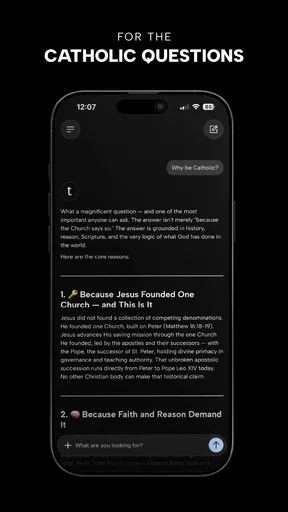
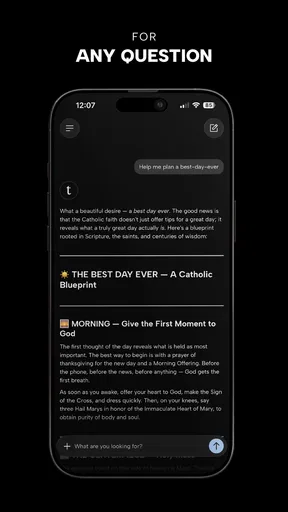
The main feature is its AI-driven Q&A. You can ask anything, from "What’s the significance of Lent?" to "Can you explain the Trinity?" The AI provides thoughtful, in-depth responses that are surprisingly well-articulated. It’s like chatting with a knowledgeable friend who has a PhD in Theology.
What’s cool is that the app doesn’t just spit out textbook definitions. Instead, it offers explanations that feel personal and relatable. This makes the app an excellent tool for anyone curious about Catholic teachings, whether you’re a lifelong believer or just exploring.
Daily Inspiration
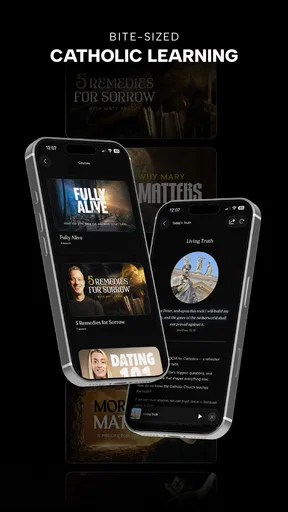
Another feature that caught my eye is the daily inspiration section. Every day, the app delivers a new quote or reflection that you can ponder over your morning coffee. It’s a nice touch that adds a personal growth element to the app, encouraging users to start their day with positivity and reflection.
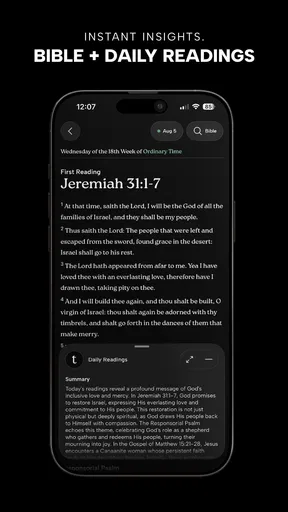
Additionally, there’s an option to reflect on daily scripture readings. This makes it easy to incorporate a bit of spiritual practice into your day, even if you’re on the go. It’s perfect for those moments when you need a little spiritual pick-me-up.
Why It Stands Out
So, what makes this app different from others in the spiritual category? For me, it’s the blend of tradition and technology. The app respects the depth and richness of Catholic teachings while using modern AI technology to make these teachings accessible to everyone.
Moreover, the app is continually being updated with new content and features. This dynamic nature ensures that it remains a relevant and valuable resource for its users. Whether you’re prepping for a catechism class or just curious about your faith, this app has something for you.
Community Engagement
Another cool aspect is the community feature. Users can participate in forums and discussions, sharing insights and learning from others. This aspect fosters a sense of connection and community, which is pretty awesome, especially in today’s digital age where finding like-minded individuals can be a challenge.
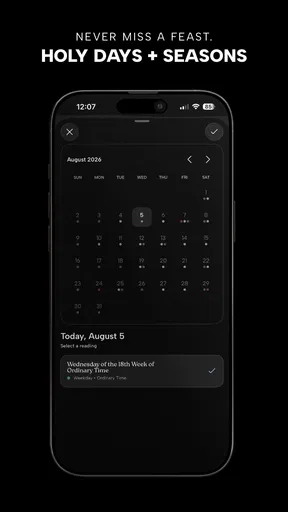
The app also includes a calendar of events and holy days, keeping you informed about upcoming celebrations and observances. This feature ensures you never miss an important date, further integrating faith into daily life.
Final Thoughts
In a world where technology often feels at odds with tradition, Truthly: Catholic AI manages to bridge the gap beautifully. It’s a fantastic tool for anyone looking to deepen their understanding of Catholicism, offering a wealth of knowledge right at your fingertips.
Whether you’re using it for study, reflection, or just to satisfy your curiosity, this app has got you covered. It’s not just an app; it’s a companion on your spiritual journey. So, if you’re on the lookout for a blend of faith and tech, give it a go. You might just find it’s exactly what you’ve been searching for.
A measured recommendation
My recommendation comes with a clear boundary: I’d use Truthly as a convenient companion for everyday curiosity, not as the sole source for a consequential religious decision. Its chat format and reflective material can make learning feel approachable, and its community and calendar features may help connect reading with shared practice. But a smooth answer is still something to assess, and personal concerns deserve human care.
If that balance sounds right to you, it is worth trying the free app and deciding whether its style fits your routine. Keep an eye on the in-app purchase options, use care with private details, and turn to established sources when accuracy or personal guidance matters most. For me, that is the fairest way to welcome a faith-focused AI into daily life: useful for opening a door, while leaving the deeper discernment in human hands.
Pros
- User-friendly interface for easy navigation.
- Provides insightful Catholic teachings.
- AI-powered responses for quick answers.
- Regular updates with new content.
- Offline access to resources.
Cons
- Limited to Catholic doctrine only.
- Requires internet for initial setup.
- AI responses lack human touch.
- No customization for notifications.
- Some features are locked behind paywall.
FAQs for Truthly: Catholic AI
What is Truthly: Catholic AI and how does it work?
Truthly: Catholic AI is an innovative application designed to provide users with AI-driven insights and guidance based on Catholic teachings. The app uses advanced algorithms to answer questions about faith, morality, and religious practices. Users can interact with the AI to seek advice, explore theological topics, and deepen their understanding of Catholicism.
Is Truthly: Catholic AI suitable for all age groups?
Yes, Truthly: Catholic AI is designed to be user-friendly and suitable for all age groups. The app provides content that is respectful and adheres to Catholic teachings, making it appropriate for users of various ages and backgrounds. However, parents may wish to guide younger users to ensure they understand the context of the information provided.
How accurate and reliable is the information provided by Truthly: Catholic AI?
Truthly: Catholic AI strives to deliver accurate and reliable information by drawing from established Catholic teachings and resources. However, users should be aware that the AI is a tool to assist with understanding and not a substitute for professional guidance or personal discernment. It's always recommended to consult with a qualified clergy for complex theological questions.
Does Truthly: Catholic AI require an internet connection to function?
Yes, Truthly: Catholic AI requires an internet connection to access its database and provide real-time answers to users' queries. The app relies on cloud-based AI technology to process information and deliver responses. Ensure you have a stable internet connection to make the most out of the app's features.
Are there any in-app purchases or subscription fees for using Truthly: Catholic AI?
Truthly: Catholic AI offers a free version with basic features accessible to all users. However, there may be optional in-app purchases or subscription plans that unlock additional content, advanced features, or premium support. Users can choose whether to make any purchases based on their needs and preferences.


